Learning to Aviate with Rich Stowell
The need to push to recover from a stall has been known since 1905. The NASA Standard spin recovery procedure has been around since 1936. The associated PARE mnemonic, since 1988. Yet no comparable standard exists for recovering from spiral dives and other unusual, banked attitudes. Some say general aviation should just follow the airlines’ lead on this.
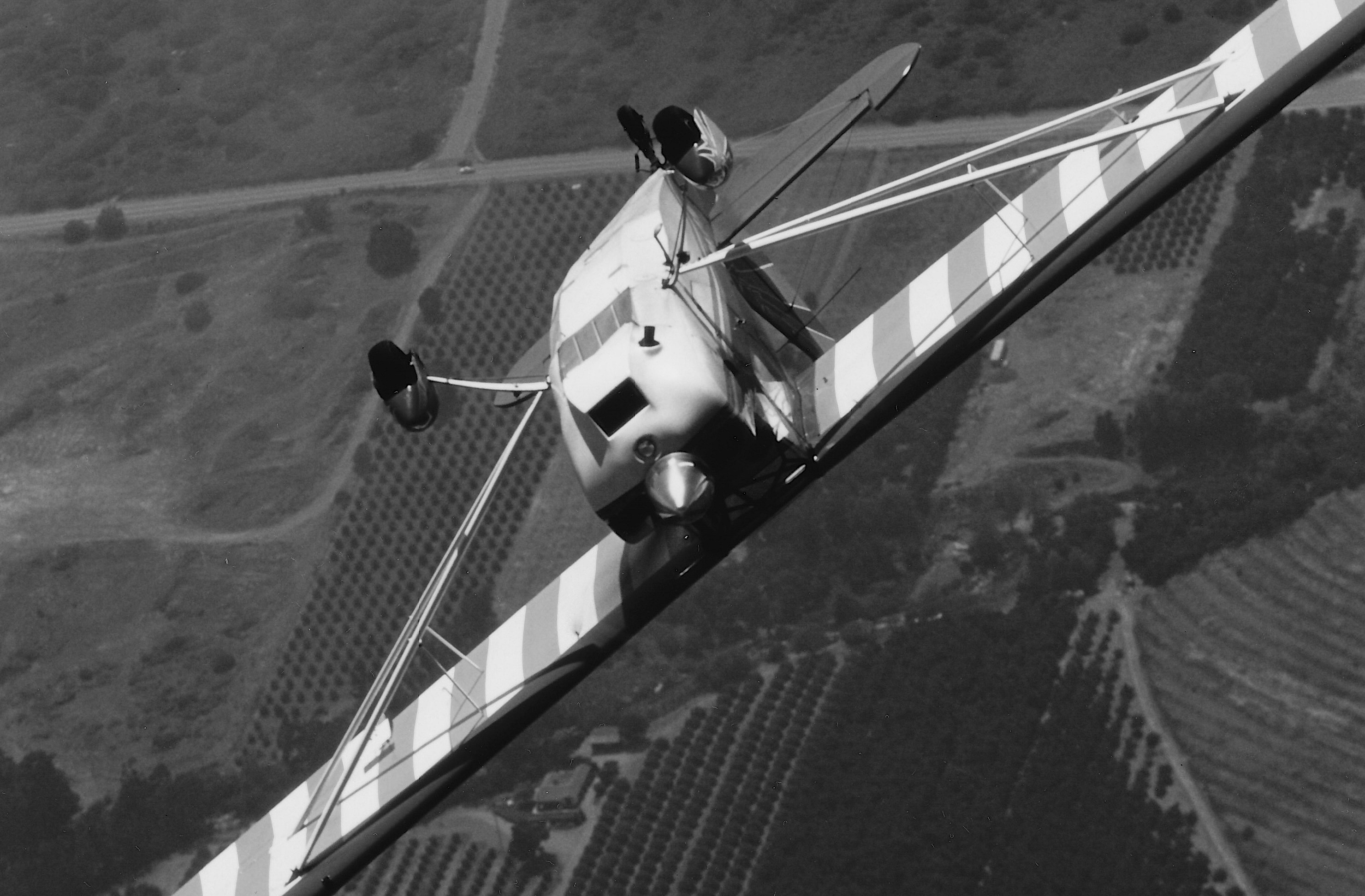
My discomfort with applying airline roll upset procedures to general aviation is twofold. First, even the airline industry has not quite figured this out yet. Current recommendations lack standardization and are often overcomplicated. Second, differences between the airline and general aviation sectors are striking. Airlines, for instance, focus on stall and roll upsets. Breakdowns in manual flying skills drive most loss of control in general aviation. In-flight loss of control for us often ends in a stall, spin, or spiral dive.
Proper roll recovery boils down to three manual control actions: power, push, and roll. Popular guidance often overlooks the need to push. Most providers of upset prevention and recovery training understand why the push is needed. Still, four different recovery sequences are taught. Such lack of standardization has always bothered me.
The Case for Power-Push-Roll
To address this issue, I’ve published a paper that takes an overdue deeper dive into recovery from roll upsets. The goal: standardize and optimize the recovery actions. I’m advocating Power-Push-Roll as a simple, ready-to-adopt roll recovery standard for general aviation. Power-Push-Roll also aligns with the concept of elegant conciseness.
Elegant conciseness is the purposeful distillation of complex actions into simple, memorable prompts that are designed to be easy to recall in stressful situations. The prompts rest on a foundation of deep understanding coupled with proper training. A perfect example of elegant conciseness is Stop, Drop, and Roll taught to children as part of fire safety.[1]
In aviation, stall recovery training offers a stark illustration:
Convoluted advice: “reduce the angle of attack,” “reattach the airflow,” and “lower the nose.”
Elegantly concise cue: “Push.”
“Push” describes the exact corrective action the pilot must take. Reducing the angle of attack and reattaching the airflow are the consequences of this action. “Push” is the actionable prompt. The rest is part of understanding the underlying aerodynamics.[2]
Power-Push-Roll leverages elegant conciseness, giving clear cues that can easily be recalled after proper training, even when stressed.
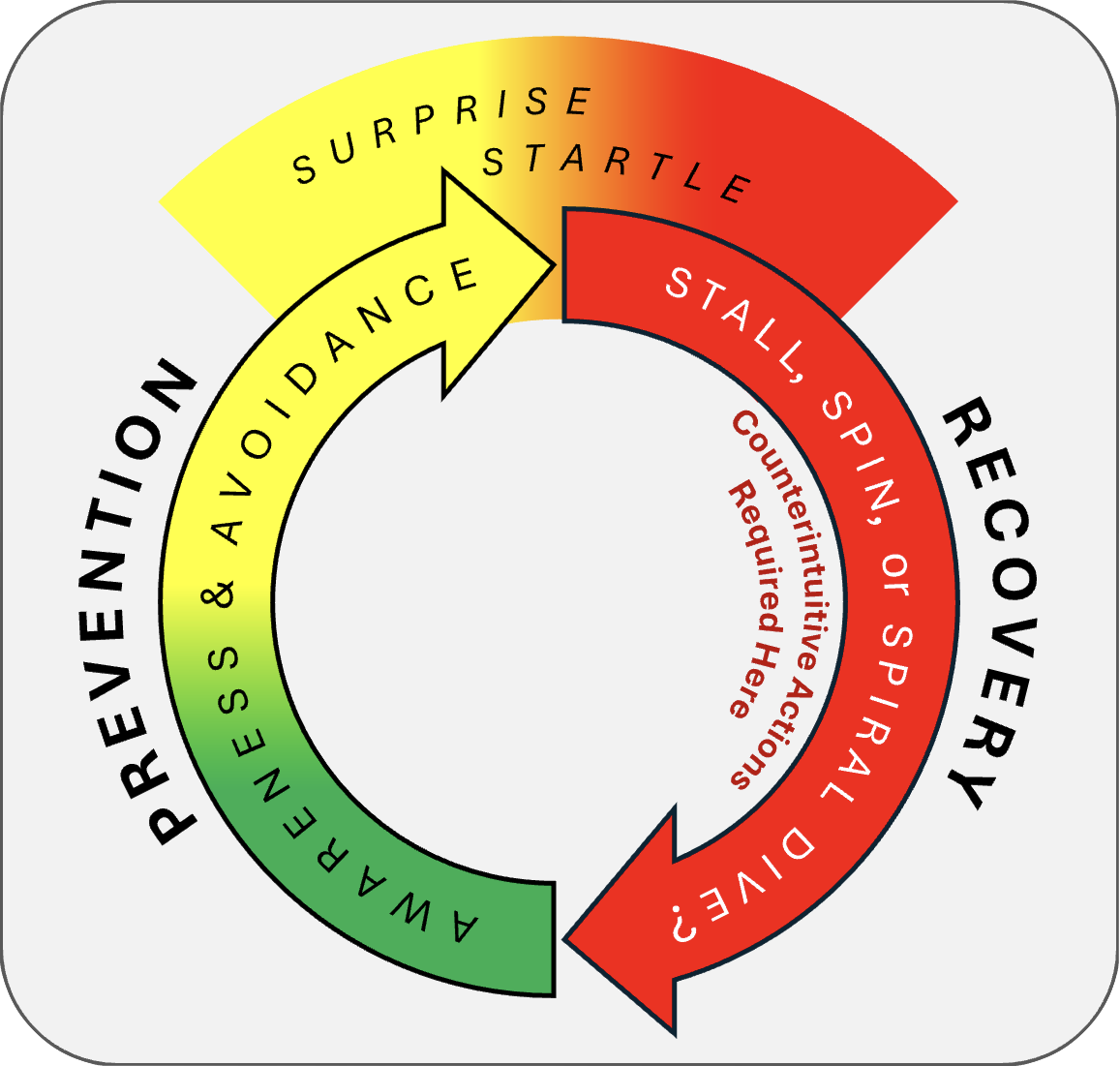
The paper draws on historical guidance from regulators, manufacturers, and training providers. It also draws on my four decades of emergency maneuver/upset training experience. The paper highlights human factors traps like startle and the instinct to pull. It clearly delineates the line between upset prevention and upset recovery. It then offers Power–Push–Roll as a GA-appropriate roll recovery strategy.
Next Steps
I encourage stakeholders to adopt Power-Push-Roll as the standard roll upset recovery strategy. Doing so will promote better alignment with key FAA and ICAO principles. It will also promote consistency during training. Appendices provide ready-to-use roll recovery templates, teaching points, and checklists. These can be incorporated into handbooks, syllabi, and UPRT programs.
I recommend improved training in stick and rudder flying skills as well, with greater emphasis placed on LOC-I awareness and avoidance. Furthermore, hands-on training is the only way to learn to use Power-Push-Roll to recover from a spiral dive or other roll upset.
The paper is available free thanks to support from these sponsors: Community Aviation, Society of Aviation and Flight Educators, and Upset Prevention and Recovery Training Network.
Get the Paper
Download your free copy here:
______________________________________________________________________________________
---References---
[1] For a refresher on Stop, Drop, and Roll, see https://www.nfpa.org/news-blogs-and-articles/blogs/2022/03/31/not-your-mothers-stop-drop-and-roll-evolution-of-a-key-fire-safety-message.
[2] For a related discussion on complexity bias, see my blog post, “Complexity” at https://blog.communityaviation.com/learning-to-aviate/complexity.
>>This post was written by a human<<

Sign up to receive an email whenever Rich Stowell publishes content